Submitted by Comunicação DRI on Thu, 08/06/2026 - 08:47
Created by Eduarda Belchior
Eduarda Belchior
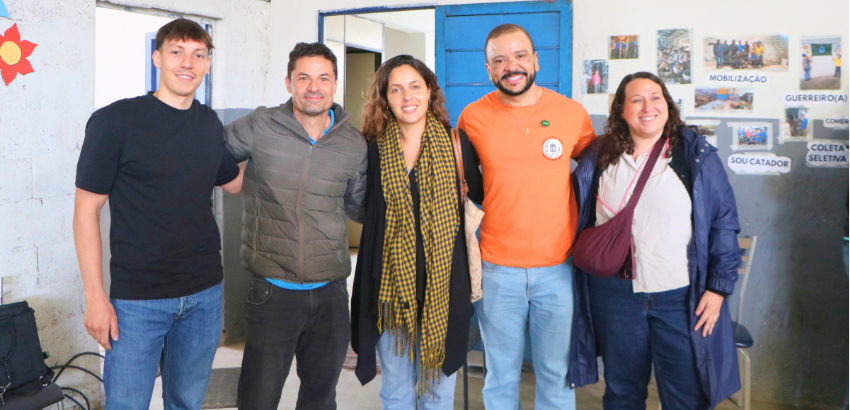
The Federal University of Ouro Preto (UFOP) recently welcomed French researchers Leila Boudra, from Paris 8 University, and Thomas Faget, from the French National Research Institute for Agriculture, Food and the Environment (INRAE). The schedule was part of the Capes-Cofecub program, an initiative that seeks to strengthen research networks between Brazilian and French institutions through the exchange of experiences.
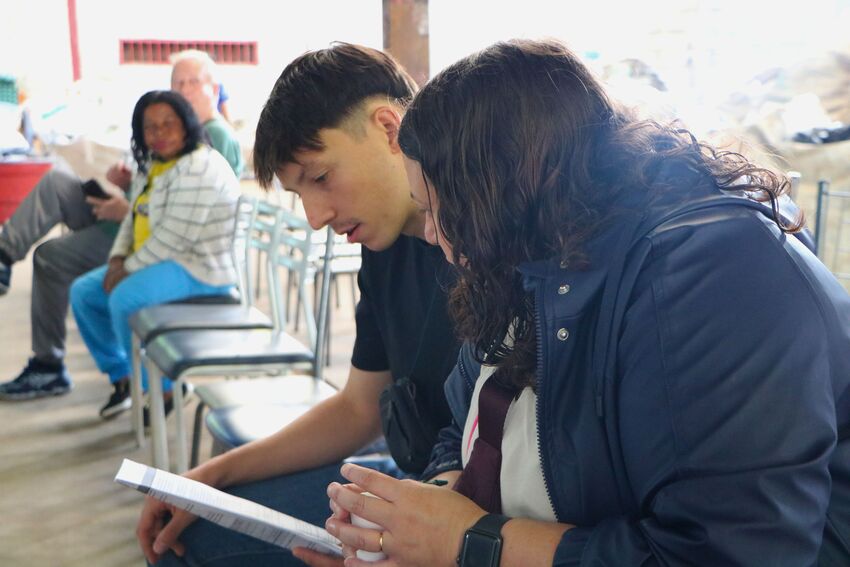
During the visit, the researchers learned about teaching, research and extension initiatives carried out by UFOP in its region. Among the activities carried out, we highlight the visits to the Cafundão settlement, where they accompanied actions related to family farming and handmade production in soapstone, and the Waste Forum and Citizenship, held at the Waste Pickers' Association warehouse of Padre Faria.
According to UFOP Professor Raoni Rocha Simões, responsible for organizing the programming, the advantage of that public notice is precisely the freedom for researchers to collectively build the activities. "I believe it is essential. Internationalization is already a key priority for the University , and this is a real opportunity to promote these meetings," he said.
For Leila Boudra, the experience allowed her to get to know closely a striking characteristic of Brazilian universities: university extension. The researcher highlighted that the projects developed in partnership with local communities represent an important source of learning for French institutions. “We have a common structure called ‘Science for society, together with society’. However, what is carried out here through the extension projects is more impactful than what we do in France. This is mainly due to the need to work with the local community.”
In addition to approaching social and community projects, the researcher pointed out that the challenges related to sustainable work are shared by different countries and that international cooperation allows us to identify both similarities and differences that can enrich the research carried out in the two countries.
The visit also provided reflections on the internationalization processes of universities and on innovation initiatives developed by UFOP. Thomas Faget highlighted the contact with the Institution's incubator as one of the most relevant points of the program. "It was very interesting to get to know the incubator and its project, which is linked to the territory and social and technological challenges," he said.
According to the researcher, although there are differences between the Brazilian and French models, both share similar objectives in encouraging entrepreneurship and the development of solutions aimed at society.
Eduarda Belchior